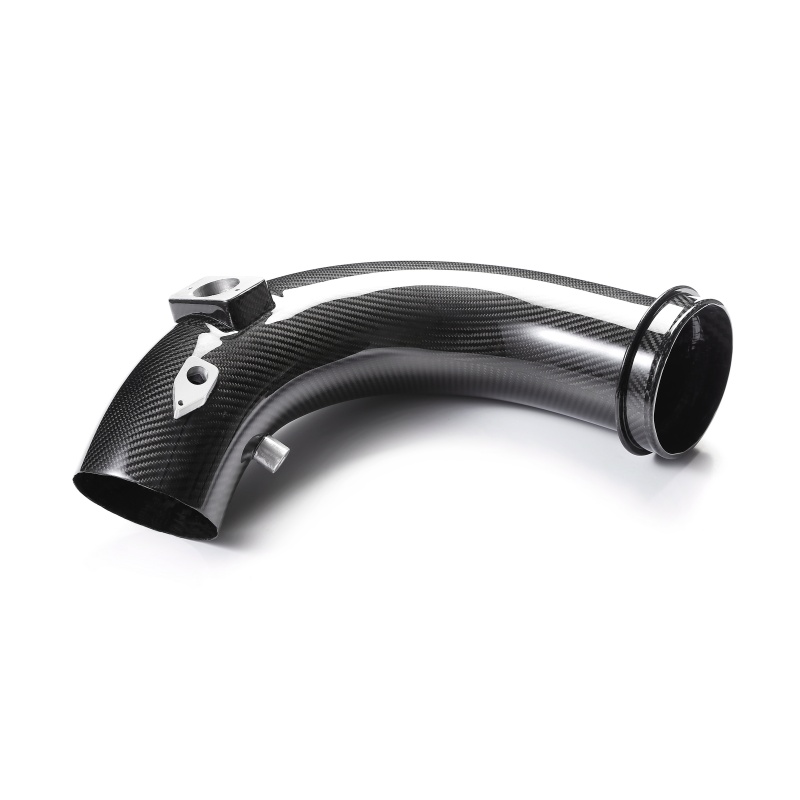
Xinbo Composites customizes high-quality carbon fiber cold air intake systems to increase horsepower and improve the overall performance of the vehicle.
Material: Carbon Fiber ( Standard/Medium/ High Modulus), Carbon Kevlar Hybrid
Patterns: UD, Twill, Plain or Carbon and Kevlar Hybrid
Size: Customized Upon Drawing
Surface Finish: Raw, Glossy & Matte Clearcoated
CNC Machining: Drilling, Trimming
Metal & Alloy Adhesive or Inserted Parts: Workable
Xinbo Composites has experience in developing cold air intake systems. The carbon fiber air intake system enhances horsepower and torque and providing increased performance, air velocity, and throttle response by alleviating airflow restrictions. The sound of the turbocharger and blow-off valve will be improved.
1. Lightweight: Carbon fiber parts are lightweight, especially compared to steel and sheet metal counterparts. By using it, you can reduce the weight of your car significantly. Lighter cars accelerate, corner, and park more effectively, making carbon fiber car parts the ideal choice.
2. High Strength: Compared to other materials, carbon fiber vehicle parts are much stiffer and stronger; they have the highest strength and stiffness per density on the market.
3. Durability: Like strength, durability is a desirable trait for car parts and materials.
4. Heat Stablility and Resistance: Usually, car parts will produce a lot of heat and for most materials, carbon fiber isn’t good at conducting heat. With carbon fiber, there is less thermal expansion. The carbon fiber parts won’t degrade due to high heat exposure, allowing they to work longer.
Upgrading to a carbon fiber cold air intake offers several performance benefits due to its advanced design and materials:
1. Enhanced Airflow
The streamlined and aerodynamic design of a carbon fiber cold air intake system allows for a larger volume of cool, unrestricted air to enter the engine. This improvement in airflow reduces air turbulence and resistance, leading to better combustion processes and improved torque response.
2. Exceptional Heat Resistance
Carbon fiber’s superior thermal insulation properties mean it doesn’t conduct heat as quickly as metals like aluminum or steel. This results in cooler intake air temperatures, which reduces heat-related deformation and stress. As a result, the engine operates more efficiently, with a reduced risk of overheating and improved performance.
3. Lightweight Construction
Carbon fiber is significantly lighter than steel, aluminum, and most plastics. This weight reduction can enhance handling and acceleration by reducing the overall vehicle weight. Carbon fiber is exceptionally durable and resistant to extreme engine conditions except for lightness.
4. Durable Performance Gains
Carbon fiber stablility and heat-resistant properties prevent warping and wear over time, ensuring consistent and reliable performance with each drive. Unlike inferior intake systems that may degrade or fail, carbon fiber parts are built to last, offering long-term reliability and sustained performance improvements.
We manufacture carbon fiber air intake tubes by autoclave molding. Autoclave molding eliminates bubbles and pinholes during the manufacturing process. It gives a perfect finish to enhance its cosmic appearance.
Lay-up of carbon fiber prepregs – We put the release agent on the surface of the mold first and lay up carbon fiber prepregs, and these layers are placed over the mold in specific orientations to achieve the desired strength and stiffness.
Vacuum Bagging – Once the lay-up is complete, the materials and mold are covered with a sealed vacuum bag. When the vacuum is applied inside the bag, trapped air is removed.
Autoclave Curing – The sealed mold is placed inside the autoclave, a large, pressurized oven that applies heat and pressure to carbon fiber prepregs. The heat catalyzes the curing of the resin, and the pressure helps compress the material, which supports bonding between the layers.
Cooling Phase – After the holding time, the autoclave is gradually cooled to room temperature while maintaining pressure to avoiding warping or deforming the material.
Pressure Release and Unbagging – When the autoclave reaches room temperature, the pressure is carefully released. The vacuum bag is removed, and the composite part is extracted from the mold.
Inspection and Quality Control – The final step involves thoroughly inspecting the composite part to ensure it meets design and quality specifications. Techniques such as ultrasonic testing or visual inspections are commonly used.
Additional Services – We also offer services including trimming, CNC machining, coating, bonding & assembling metal or plastic parts, as well as Logo printing.

Composites Expert for Customized Premium Carbon Fiber Products & Telescopic Pole Systems