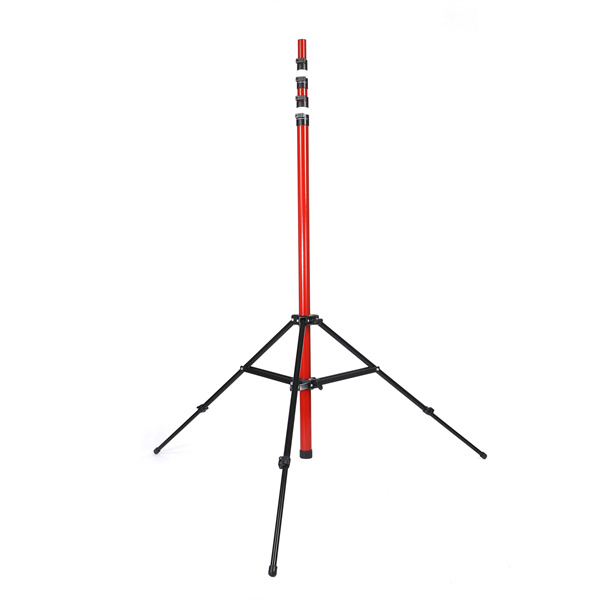
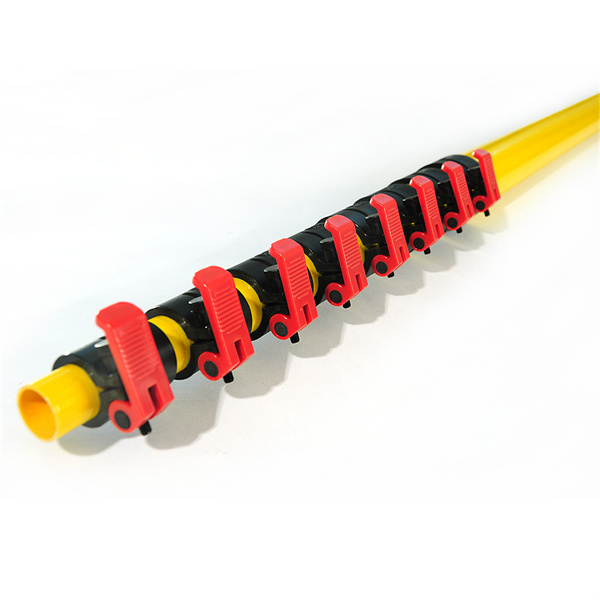
Telescoping Fiberglass Mast are designed to raise many different types of antennae to the required height.
Material: Fiberglass
Surface: Natural or Painted Glossy or Matte
Pattern: Colored Fiberglass
Min OD: 23.5 mm
Max OD: 51.5 mm
Extended Length: 1m ~ 15m
Contracted Length: 0.3m ~ 2.25m
Clamp: Quick-release Clamps
Accessories: Standard and heavy-duty aluminum tripods,wire-guying systems, top connector are available
Remarks: Diameters & Extended Length can be customized
Fiberglass antenna mast is a lightweight, non-conductive support pole used to raise antennas for radio communication, wireless systems, emergency communication, field deployment, and portable antenna setups. It is widely used in amateur radio, military communication, marine communication, temporary networks, and outdoor monitoring systems.
Compared with metal masts, fiberglass antenna masts provide excellent electrical insulation. This makes them especially suitable for antenna applications where signal performance, safety, and non-conductive properties are important.
Telescoping Fiberglass Masts consist of multiple sections of fiberglass tubes that can be extended or retracted to adjust the length of the pole according to specific needs. Telescopic antenna masts are commonly used for ham radio, mobile, temporary or permanent deployment of equipment.
Made of insulated fiberglass, electrically non-conductive, with strength and durability
Available in many heights, from 3m/10ft to 15m /50ft
Anti-UV, corrosion-resistant
Good corrosion resistance for outdoor and marine use
Lightweight compared with steel and aluminum masts
Lower cost than carbon fiber
Good impact resistance
Suitable for portable and temporary antenna deployment
Works with an aluminum tripod and wire guying system, increasing stability in windy situations
Perfect for broadcasting, cellular, radio, Wi-Fi, and Wi-Max applications
Carbon fiber antenna masts are lighter and stiffer than fiberglass masts. They are suitable for high-end portable systems where low weight and high stiffness are required.
Fiberglass antenna masts are usually more economical and provide better electrical insulation. Carbon fiber has conductive properties, while fiberglass is naturally non-conductive.
For most general antenna applications, fiberglass offers a practical balance of cost, performance, and insulation. For premium lightweight applications, carbon fiber may be selected, but fiberglass remains the better choice when non-conductive behavior is required.
Aluminum antenna masts are strong, rigid, and widely available. However, aluminum is conductive, which may not be suitable for some antenna configurations. It can also corrode in humid environments if not properly treated.
Fiberglass antenna masts are non-conductive and more corrosion-resistant. They are often preferred for radio antennas, temporary communication systems, and applications where electrical insulation matters.
Aluminum is a good choice for low-cost and high-rigidity applications. Fiberglass is better when insulation, RF neutrality, corrosion resistance, and safety are more important.
Fiberglass antenna masts are used in many communication systems.
In military and tactical communication, fiberglass masts are used for portable antennas, temporary command posts, and field radio systems.
In emergency communication, fiberglass telescopic masts help rescue teams quickly deploy antennas after disasters, power failures, or network outages.
In marine environments, fiberglass masts are suitable because they resist corrosion and provide electrical insulation.
In industrial sites, fiberglass masts can support wireless antennas, sensors, monitoring devices, or temporary network equipment.
In vehicle-mounted systems, fiberglass masts can be used on communication vehicles, inspection vehicles, emergency vehicles, and mobile command units.
In amateur radio, they are used to support HF, VHF, and UHF antennas during outdoor operation, field days, camping, and emergency communication.
Fiberglass antenna masts are a practical and reliable solution for raising antennas in portable, temporary, outdoor, marine, and emergency communication systems. The biggest advantages are electrical insulation, corrosion resistance, reasonable weight, and cost-effectiveness.
For radio communication, wireless deployment, tactical systems, and field antenna support, fiberglass antenna masts provide a strong balance between performance, safety, and affordability.

Composites Expert for Customized Premium Carbon Fiber Products & Telescopic Pole Systems