
Most drone builders spend hours comparing motors, arguing over ESC brands, and debating flight controller firmware. The carbon fiber tubes? Those usually get picked last often just by copying whatever someone else used in a build video.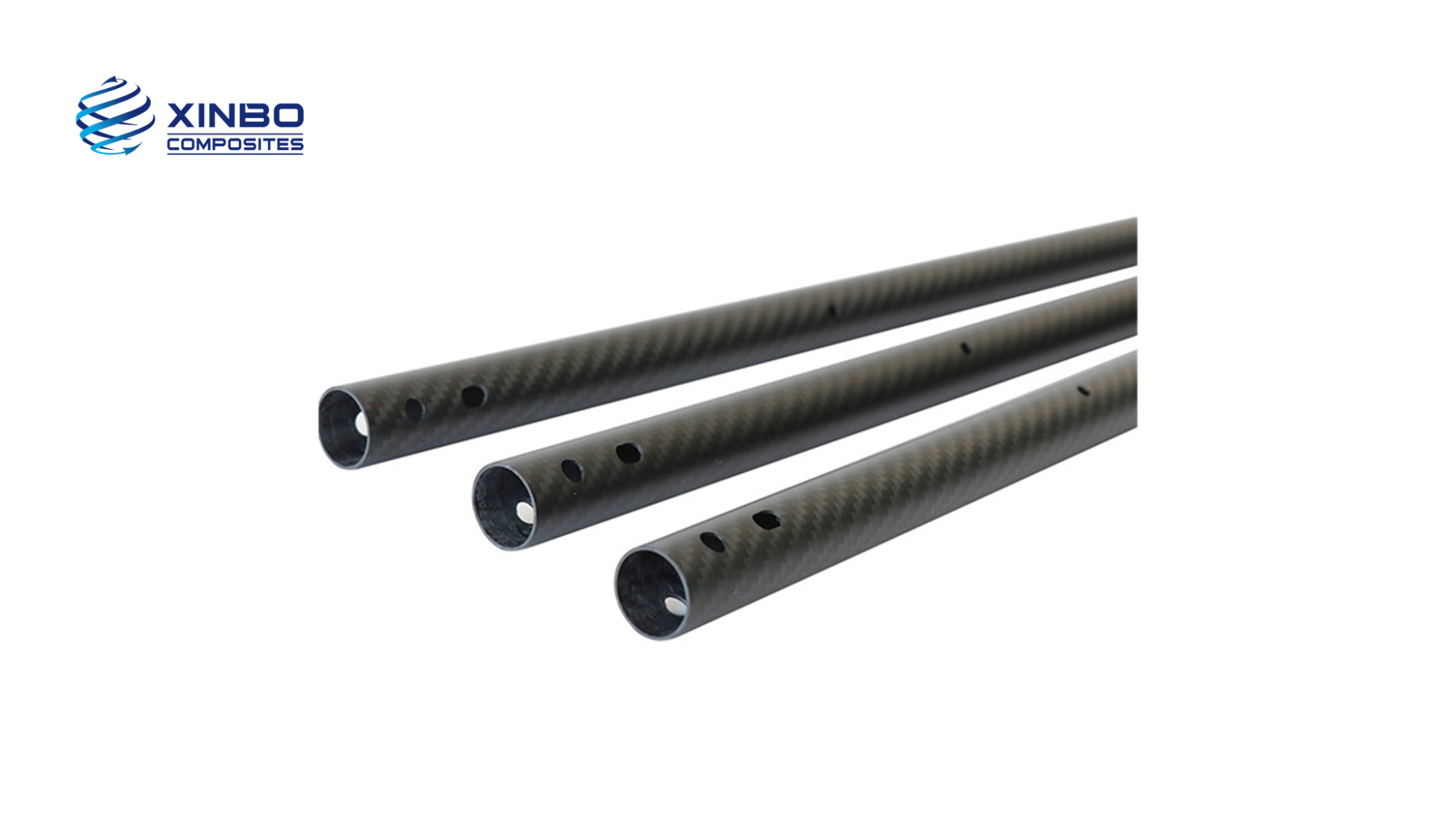
That’s a mistake.
The tubes are the skeleton of your drone. Get the size wrong and your arms flex under throttle, killing your tune before you’ve even started. Pick the wrong profile and you’ll be drilling custom adapter plates just to mount a motor. Go too thin on wall thickness and one mid-speed crash turns a bent arm into a snapped one.
The good news is that once you understand a few basic rules, picking the right carbon fiber tube becomes straightforward. This guide covers everything round vs square, diameter, wall thickness, fiber grade, and a quick-reference table you can come back to every time you start a new build.
Why the Tube You Choose Affects How Your Drone Flies
Carbon fiber tubes aren’t just structural they directly shape how your drone flies.
Weight is the obvious one. Heavier arms mean less flight time and slower handling. Every gram you add to the arms is weight your motors have to carry on every flight.
Stiffness matters just as much. A tube that flexes under the vibration of spinning props creates feedback loops that make your drone almost impossible to tune. Stiffer arms dampen vibration better and give your flight controller a cleaner signal to work with.
Profile determines how easily you can build. A tube that doesn’t give you a clean flat surface to mount hardware on means extra brackets, extra weight, and extra assembly time.
None of these things happen by accident. They all start with the tube you choose.
Round vs Square Tube: Which Profile Does Your Drone Need?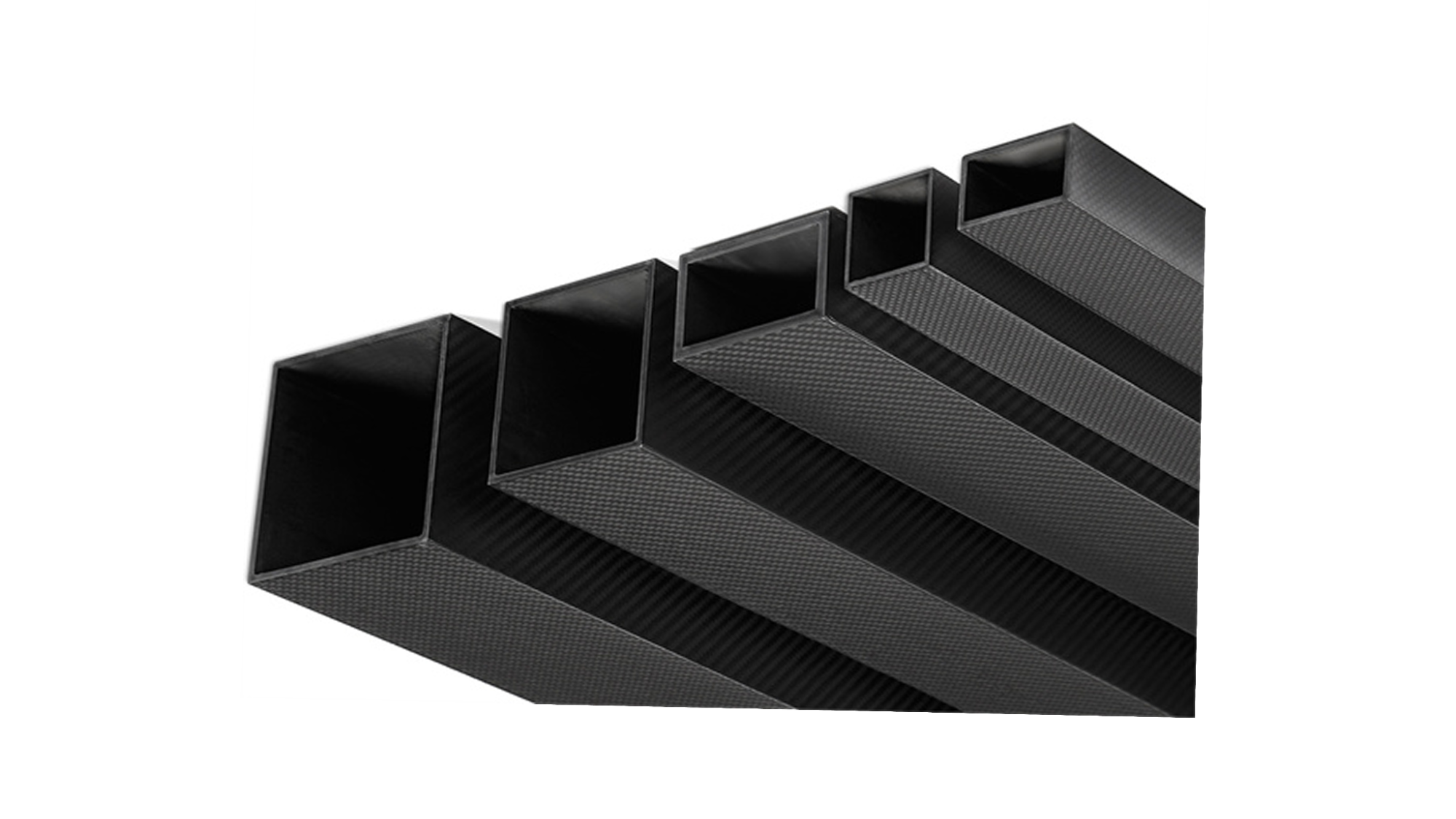
This is the first decision to make, and it’s simpler than most builders think.
Carbon fiber round tubes are the default for most drone arm designs. They fit neatly into standard motor mounts and arm clamps, handle twisting forces well, and are easy to source in any diameter. If your frame uses clamp-style motor mounts or the arms slide into a central plate, round is almost certainly what you need.
Carbon fiber square tubes shine when you want to bolt hardware directly onto a flat surface. Motors, FPV camera brackets, and landing gear can all be attached without custom adapters because the flat face of the tube acts as a natural mounting surface. Many heavy-lift and industrial drone frames use Carbon Fiber Square Tubes for exactly this reason.
Some builders use both carbon fiber round tubes for the main arms and square profiles for booms or payload rails where flat mounting matters.
When in doubt, look at how your motor mounts attach. If they clamp around a tube, go round. If they bolt to a flat face, go square.
How to Pick the Right Tube Diameter for Your Frame Size
Outer diameter (OD) is the measurement of the outside of the tube. Inner diameter (ID) is the inside the hollow part. Wall thickness is the difference between the two.
When choosing OD for drone arms, the general rule is: bigger frames need bigger tubes. Here’s a simple way to think about it:
- Mini and toothpick builds (under 3″) 6mm to 8mm OD carbon fiber round tubes are standard. Anything larger adds unnecessary weight at this scale.
- 5″ freestyle and racing frames 10mm to 12mm OD is the most common range. These hit the sweet spot between stiffness and weight for a typical 5″ build.
- 7″ long-range builds 12mm to 16mm OD. Longer arms need larger tubes to stay stiff enough to handle the heavier props and motors.
- Heavy lift and industrial frames 16mm to 25mm OD and above. At this scale, arm stiffness is critical for payload stability.
A tube that’s too thin for the arm length will flex. A tube that’s too thick adds weight your motors have to carry for no real benefit.
Wall Thickness: How Thin Is Too Thin?
Wall thickness is where most builders underestimate the impact of their choice.
Thin walls reduce weight, but they also reduce crash resistance. Thick walls add stiffness and durability, but every extra half-millimetre adds up across four or six arms.
Here’s a practical guide by build type:
| Drone Type | Arm OD | Recommended Wall |
| Mini / Toothpick (under 3″) | 6–8mm | 0.5–1mm |
| 5″ Freestyle / Racing | 10–12mm | 1–1.5mm |
| 7″ Long Range | 12–16mm | 1.5–2mm |
| Heavy Lift / Industrial | 16–25mm+ | 2–3mm+ |
For freestyle builds that crash regularly, lean toward the thicker end of the range for your arm size. For long-range builds where you’re trying to maximise efficiency and crashes are rare, you can go thinner.
One important note: wall thickness affects how the arm fits into your frame’s motor mount. Always check the ID of your tube against the shaft size or clamp specification before ordering.
Does Carbon Fiber Grade Actually Matter for Drones?
The short answer: for most builds, no. For racing and precision builds, yes.
Carbon fiber tubes come in different modulus grades this is a measure of how stiff the fiber itself is. The main grades are:
Standard modulus is what the vast majority of drone frames use. It offers a good balance of stiffness, strength and cost. Unless you have a specific reason to go higher, this is the right choice.
High modulus fiber is stiffer but more brittle. It’s used in racing applications where maximum arm stiffness is critical for response and tune, or in precision systems like survey drones where dimensional stability across temperature changes matters. The downside is that high modulus tubes are more expensive and less forgiving in a crash.
If you’re building a freestyle quad that’s going to hit gates and clip trees, standard modulus is your friend. If you’re building a racing machine where every millisecond of response counts, high modulus is worth the investment.
When to Use Carbon Kevlar Tubes Instead of Pure Carbon Fiber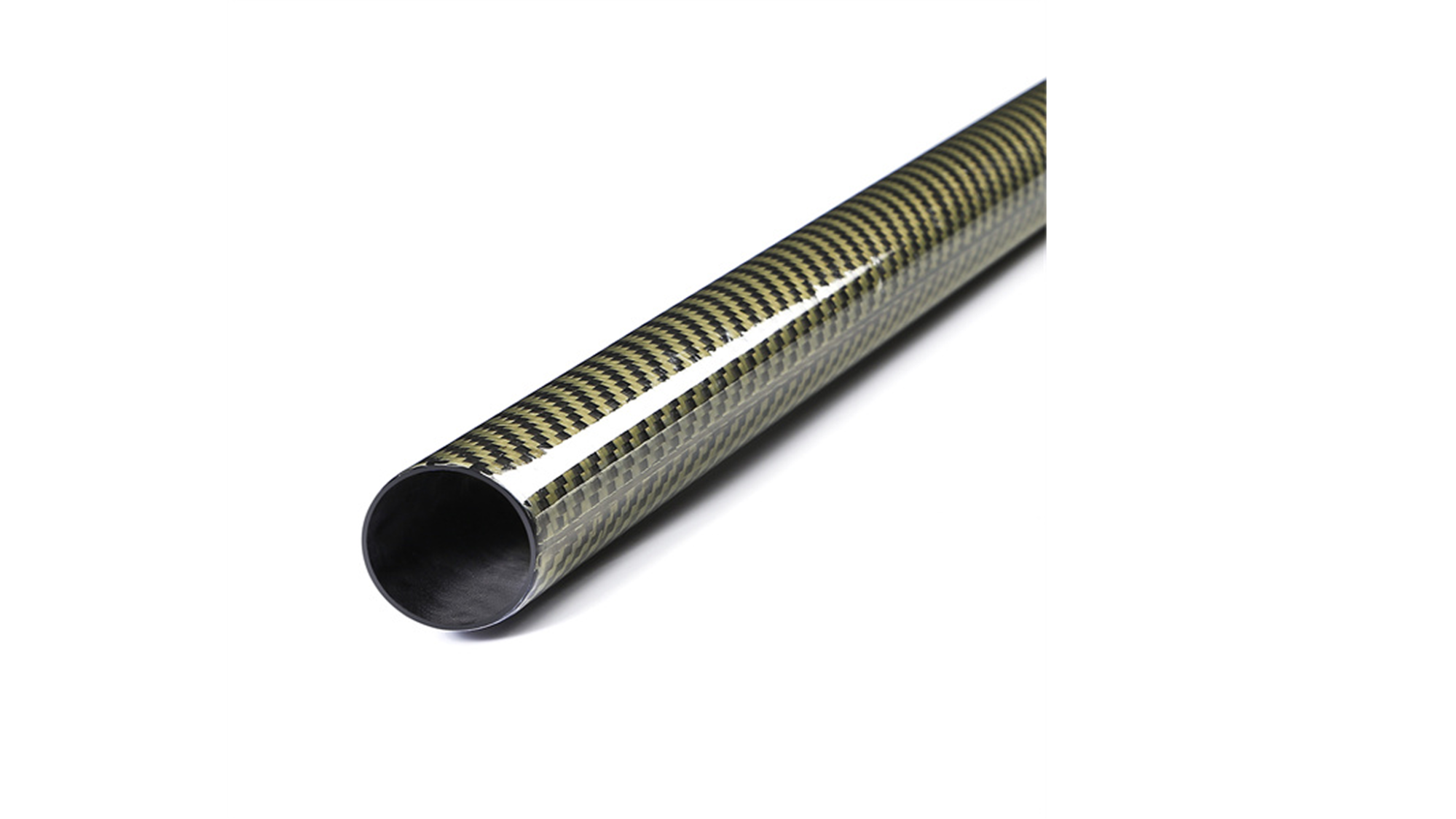
Most drone builders work with pure carbon fiber. But if you’re building for environments where crashes are frequent or inevitable agricultural spraying drones, inspection drones operating on construction sites, or delivery drones that land on uneven surfaces carbon fiber Kevlar hybrid tubes are worth considering.
Kevlar fibers woven into the carbon fiber layup make the tube significantly more impact-resistant. Pure carbon fiber cracks and splinters on a hard hit. Carbon Kevlar tends to absorb the impact and deform rather than shatter, which often means the difference between a bent arm and a destroyed frame.
The trade-off is a small increase in cost and slightly lower stiffness compared to pure carbon fiber. For professional and commercial drone applications, that trade-off is almost always worth making.
Quick Reference Recommended Tube Specs by Drone Type
| Drone Type | Profile | OD | Wall Thickness | Fiber Grade |
| Mini / Toothpick | Round | 6–8mm | 0.5–1mm | Standard |
| 5″ Freestyle | Round | 10–12mm | 1–1.5mm | Standard |
| 5″ Racing | Round | 10mm | 1–1.5mm | High Modulus |
| 7″ Long Range | Round | 12–16mm | 1.5–2mm | Standard |
| Heavy Lift Industrial | Round or Square | 16–25mm+ | 2–3mm+ | Standard |
| FPV Wing / Fixed Wing | Square or Rectangular | Custom | 1.5–2mm | Standard |
Use this as a starting point your specific motor, prop and frame design may require adjustments, but these ranges cover the vast majority of common builds.
Frequently Asked Questions
What size carbon fiber tube is best for a 5-inch drone?
A 10mm to 12mm OD carbon fiber round tube with 1mm to 1.5mm wall thickness covers most 5″ freestyle and racing builds. Racing builds that prioritise maximum stiffness sometimes go up to 12mm with 1.5mm walls.
Is carbon fiber round tube or a carbon fiber square tube better for drone arms? Round is better for arms that fit into clamp-style motor mounts, which covers the majority of drone frames. Square is better when you need a flat surface to bolt hardware directly onto the arm, which is more common in industrial and heavy-lift designs.
Can I use aluminum tubes instead of carbon fiber for a drone frame?
You can, but you’ll pay for it in flight time. Aluminum is heavier than carbon fiber for the same stiffness, which means your motors carry more weight on every flight. For serious builds, carbon fiber is the standard for a reason.
How do I cut carbon fiber tubes cleanly for a drone frame?
Use a thin diamond-coated cutting disc or a fine-toothed hacksaw blade. Cut slowly and keep the cut area cool. Carbon fiber can delaminate if it overheats. Always wear a dust mask when cutting. Better still, order your tubes pre-cut to length from your manufacturer and skip the hassle entirely.
Final Thoughts
Choosing the right carbon fiber tube does not have to be complicated. Match your OD to your frame size, choose your wall thickness based on how hard you fly, and let the profile follow your mounting needs. Get those three things right and the rest of the build falls into place.
If you need tubes cut to a specific length, a custom OD, or a hybrid layup for a demanding application, Xinbo Composites manufactures carbon fiber tubes, square profiles, and Kevlar hybrid tubes to spec. You can browse standard stock or get in touch to discuss a custom order.