

Introduction
Carbon fiber is well known for its exceptional strength-to-weight ratio, rigidity, and durability, making it the material of choice across industries like aerospace, automotive, marine, robotics, and sporting goods. However, machining carbon fiber is very different from machining metals or plastics. Due to its abrasive fibers, layered structure, and resin matrix, improper machining can lead to tool wear, delamination, fiber pull-out, or poor surface finishes.
That’s why engineers and manufacturers follow strict CNC machining best practices to achieve precise dimensions, smooth edges, and consistent performance. In this guide, we’ll cover:
- Best practices for CNC machining carbon fiber
- Tooling recommendations for improved efficiency and durability
- Surface finishing techniques for professional-quality results
- Application insights for industries using CNC carbon fiber components
Challenges of CNC Machining Carbon Fiber
Before diving into solutions, it’s important to understand the unique challenges carbon fiber presents during machining:
- Abrasive Fibers: Carbon fibers are extremely abrasive, causing rapid tool wear compared to aluminum or plastics.
- Layered Structure: The composite’s anisotropic nature (different strength along different axes) can cause delamination during drilling and milling.
- Heat Generation: Excessive heat weakens the resin matrix, leading to poor surface quality.
- Dust Control: Fine carbon dust is hazardous if inhaled and can damage equipment.
Recognizing these challenges helps engineers implement precision strategies and tooling choices.
Best Practices for CNC Machining Carbon Fiber
1. Optimize Cutting Parameters
- High RPM, Low Feed: Use high spindle speeds but maintain a lower feed rate to minimize delamination.
- Climb Milling: Preferred over conventional milling as it reduces edge fraying and improves surface quality.
- Shallow Depth of Cut: Prevents excessive heat buildup and avoids tool overloading.
2. Use Proper Tooling
Tool selection is critical for machining carbon fiber efficiently. (We’ll cover detailed tooling recommendations in the next section.)
3. Implement Dust Extraction Systems
Carbon dust is conductive and abrasive. CNC machines should use HEPA filtration systems or vacuum extraction to protect both operators and equipment.
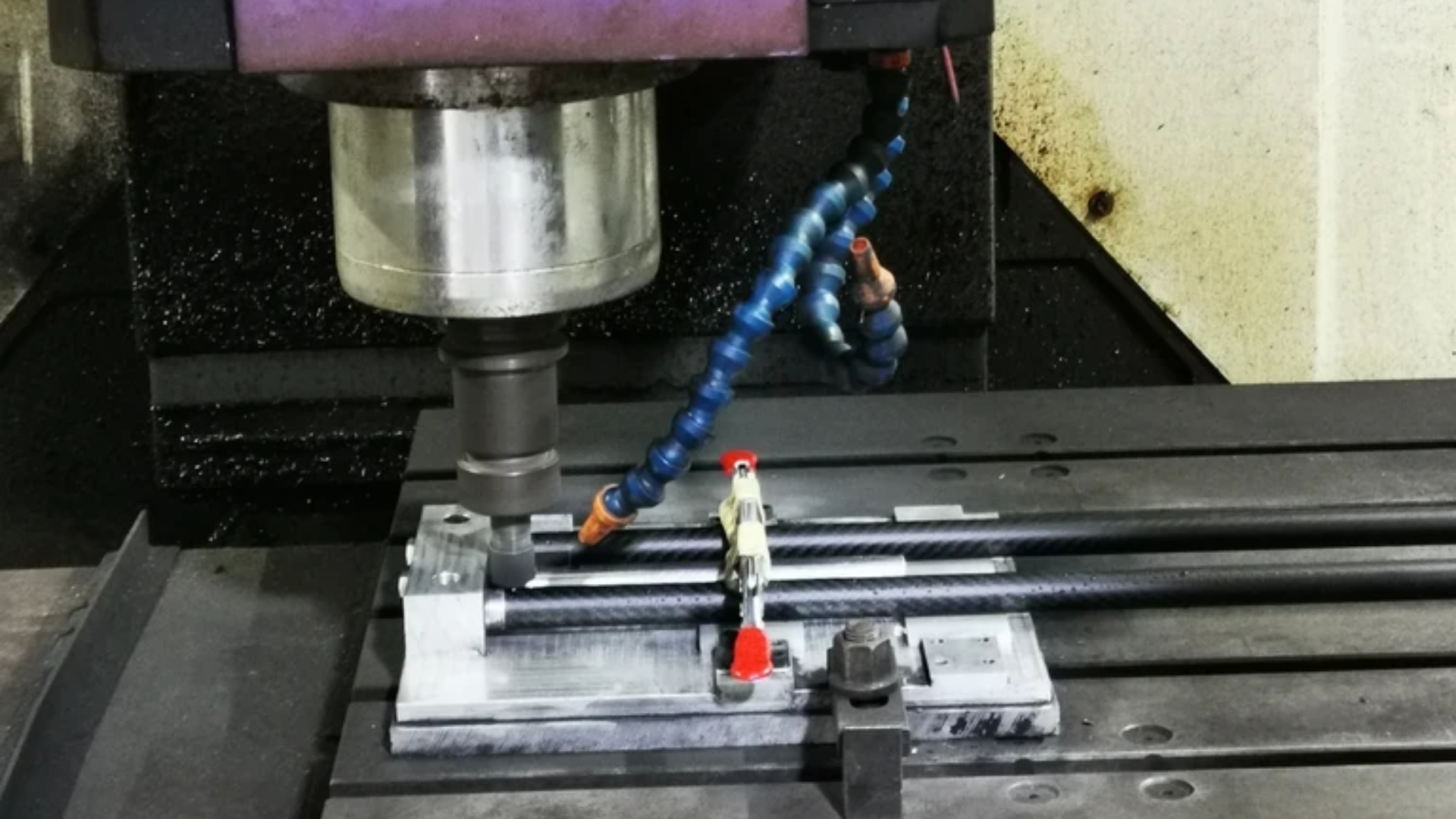
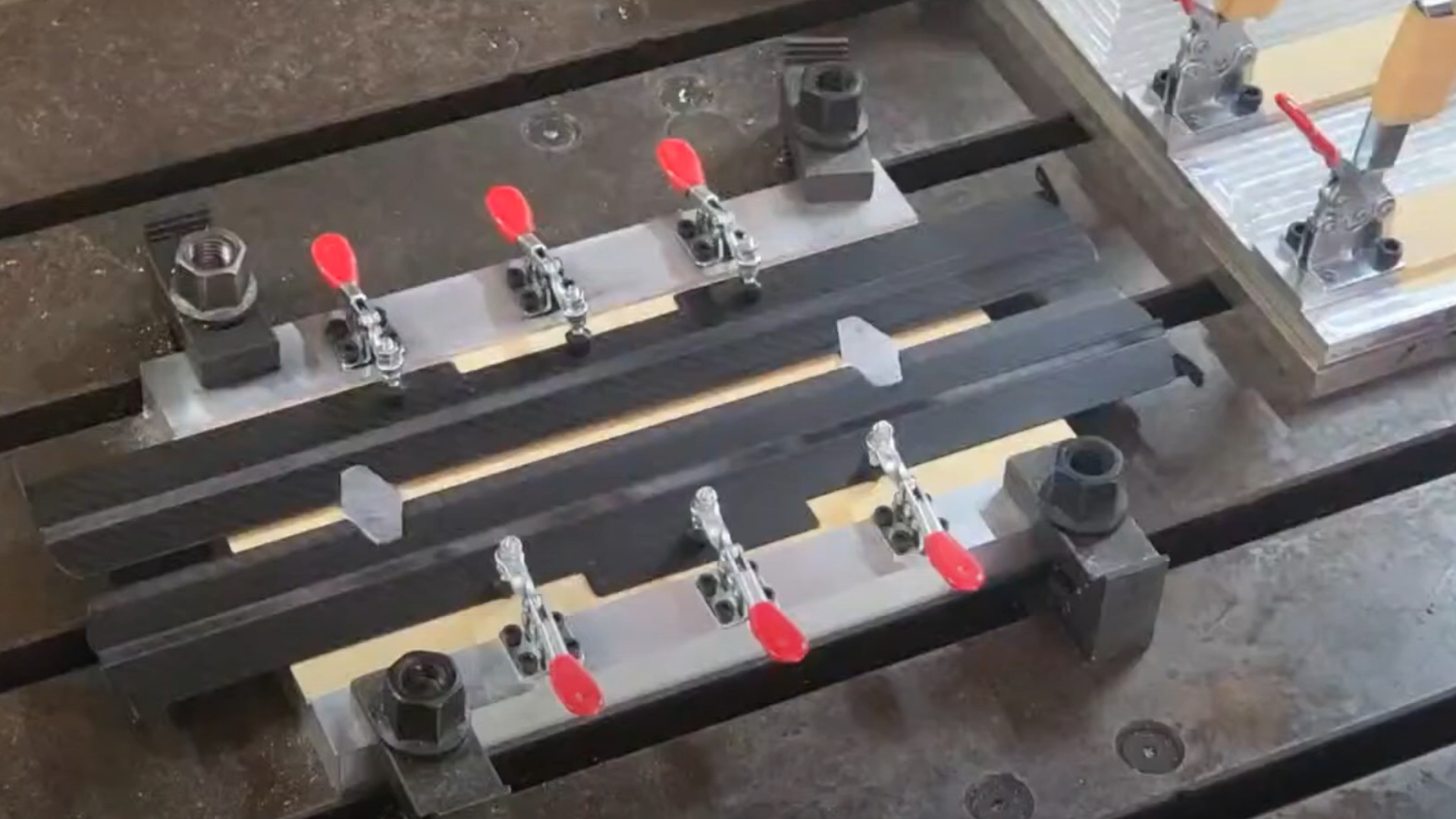
4. Fixture Stability
Secure fixturing prevents part vibration, which can lead to edge chipping or misalignment.
5. Cooling & Lubrication
Carbon fiber is usually machined dry. Using conventional coolants is avoided because they can contaminate the resin matrix. Instead, air blast cooling is used to reduce dust and maintain temperature control.
Tooling Recommendations for Carbon Fiber CNC Machining
Diamond-Coated Tools
- Polycrystalline Diamond (PCD) tools are the gold standard.
- Provide long tool life (10x longer than carbide).
- Deliver superior edge quality with minimal fraying.
Carbide Tools
- Less expensive but wear out quickly.
- Suitable for short production runs or prototypes.
Specialty Router Bits
- Down-cut and compression bits help reduce delamination at entry and exit points.
Drill Bit Selection
- Diamond-coated or brad-point drill bits reduce splintering.
- Peck drilling cycles help minimize heat and delamination when drilling holes.
Surface Finish Tips for Carbon Fiber CNC Machining
Edge Finishing
After CNC cutting, edges may show fraying or roughness. Recommended finishing methods include:
- Diamond sanding for smoothness.
- Sealing with epoxy to protect exposed fibers.
Surface Coating
Applying a thin clear coat or resin layer enhances appearance, UV resistance, and durability.
Polishing
For aesthetic parts (e.g., automotive interiors, consumer products), polishing ensures a smooth, glossy finish without compromising strength.
Avoid Over-Machining
Overworking the surface generates excess heat and weakens the resin-fiber bond. Controlled passes are better than aggressive cutting.
Applications of CNC-Machined Carbon Fiber Components
Aerospace
- Structural brackets, interior components, and UAV frames require precise CNC machining for weight reduction and strength.
Automotive
- Custom body panels, suspension components, and dashboards benefit from carbon fiber CNC machining’s accuracy.
Robotics & Automation
- Lightweight robotic arms and automation equipment rely on CNC carbon fiber parts for speed and stiffness.
Marine & Sporting Goods
- Masts, paddles, and performance equipment require CNC machining for consistent shapes and reliable finishes.
Carbon Fiber CNC Machining vs Metal CNC Machining
|
Factor |
Carbon Fiber CNC Machining | Metal CNC Machining |
|
Tool Wear |
High (abrasive fibers) | Moderate |
|
Coolant Use |
Dry/Air blast |
Coolant essential |
| Surface Finish | Requires sealing/coating |
Can be polished directly |
| Cutting Speed | High RPM, low feed |
Moderate to high |
| Dust Management | Essential |
Less critical |
Quality Control in Carbon Fiber CNC Machining
To ensure reliable parts, manufacturers follow strict quality checks:
- Dimensional accuracy verification using CMM (Coordinate Measuring Machines).
- Surface integrity inspection for cracks, delamination, or fiber exposure.
- Resin quality checks to confirm no overheating damage.
Xinbo Composites integrates CNC machining with advanced composites expertise, ensuring consistent quality across aerospace, automotive, and industrial applications.
FAQs About CNC Machining Carbon Fiber
1. Why is carbon fiber difficult to machine?
Because carbon fiber is abrasive and anisotropic, it causes tool wear and requires specialized tooling and cutting strategies.
2. What tools are best for CNC machining carbon fiber?
Diamond-coated (PCD) tools are preferred due to their durability and edge quality. Carbide tools can work for prototypes but wear faster.
3. Can you drill holes in carbon fiber without cracking?
Yes. By using diamond-coated drill bits, peck drilling cycles, and proper fixturing, engineers can drill clean holes without delamination.
4. How do you achieve a smooth surface finish on CNC carbon fiber parts?
Through diamond sanding, epoxy sealing, polishing, and clear coating, we ensure both functional and aesthetic quality.
5. Is CNC machining carbon fiber more expensive than metals?
Yes, primarily due to tool wear, dust management, and specialized processes. However, the performance benefits in strength, weight, and durability often outweigh the costs.
Conclusion
CNC machining carbon fiber requires a balance of specialized tooling, optimized cutting parameters, and careful dust management. By following best practices, engineers can achieve precision, durability, and superior surface finishes while extending tool life.
At Xinbo Composites, we offer CNC machining services tailored for carbon fiber, ensuring high-quality, custom-engineered components for aerospace, automotive, marine, robotics, and industrial applications.
Looking for CNC-machined carbon fiber solutions? Contact Xinbo Composites today to discuss your project requirements.