

Telescopic Masts Are Essential for Modern Site Imaging
Elevated imaging is a critical requirement across sectors such as infrastructure inspection, site monitoring, event management, and creative production. In environments where drone usage is limited or impractical, telescopic camera masts and poles provide an efficient, stable, and controlled method for capturing high-angle visuals. These tools are engineered for reliability, portability, and ease of use, supporting a wide range of professional applications.

What Is a Telescopic Camera Mast?
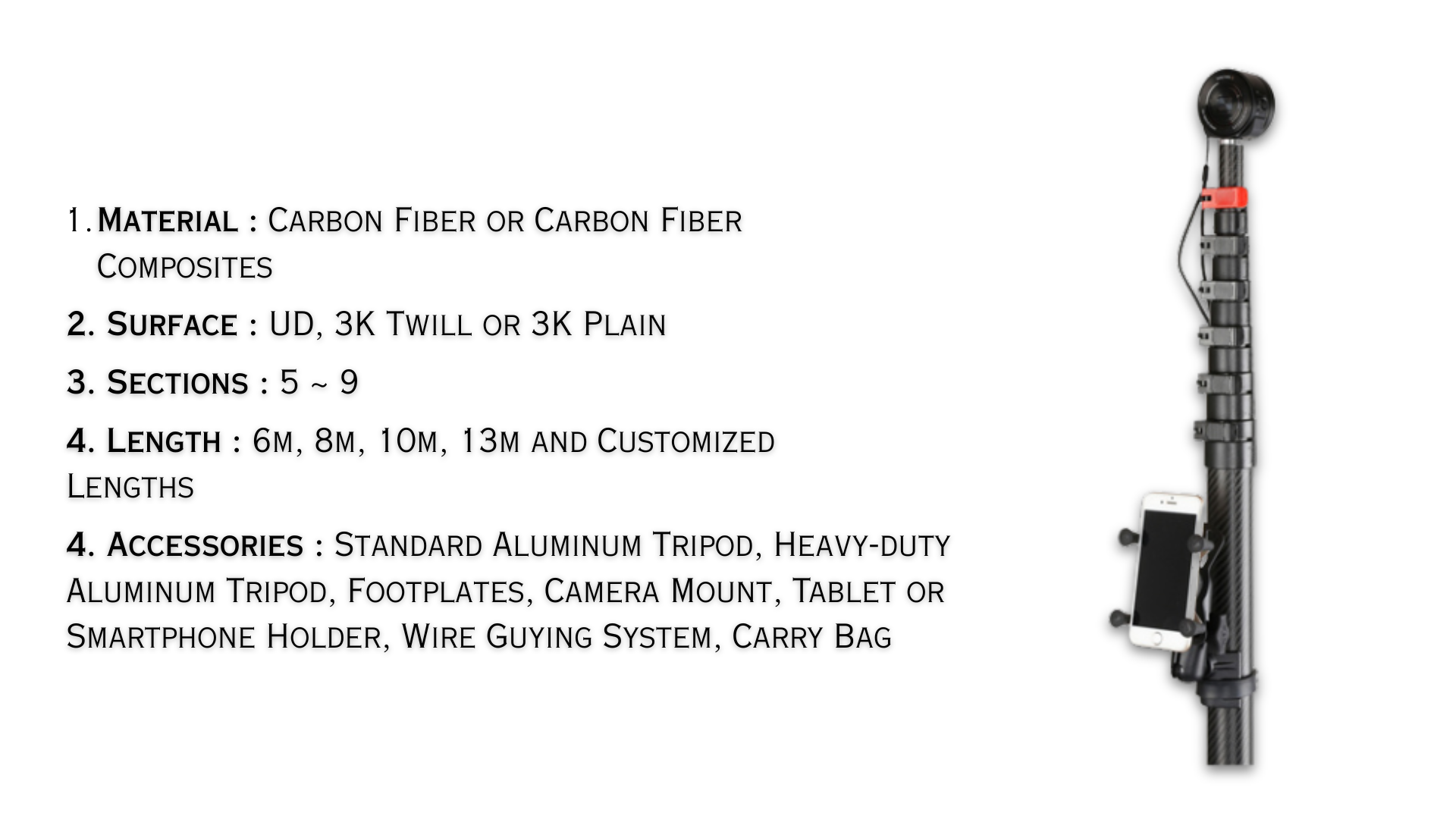
A telescopic camera mast is an extendable pole system designed to raise cameras, sensors, or imaging equipment above ground level. Constructed primarily from carbon fiber, these masts offer a balance between rigidity and low weight, allowing for safe operation by a single user and straightforward transport.
How Does a Telescopic Camera Mast Work?
The operation of a telescopic camera mast is straightforward:
- Setup: The base is placed on stable ground or mounted using a tripod for additional stability.
• Attachment: Cameras or sensors are secured to the mast’s head with compatible mounts or clamps.
• Extension: The mast is extended section by section to the required height, which can range from several meters to over 13 meters, depending on the model.
• Operation: Cameras are controlled remotely, either via wireless devices or cable, allowing operators to capture images or video from the ground.
• Adjustment: Many systems offer tilt and rotation functions for precise framing.
• Pack Down: After use, the mast is retracted and stored for transport.
Key Applications for Telescopic Camera Masts

Telescopic camera masts and poles are utilized in a variety of professional contexts:
- Infrastructure Inspection: Enables safe, ground-based visual assessment of roofs, facades, towers, bridges, and other structures.
• Site and Event Monitoring: Provides elevated viewpoints for crowd management, security, and logistics at large gatherings or construction sites.
• Surveying and Mapping: Supports overhead image capture for land management, progress tracking, and planning.
• Creative Production: Facilitates unique camera angles for photography, videography, and time-lapse projects where stability and precise control are required.
Advantages Over Alternative Methods
- Regulatory Compliance: Unlike drones, camera masts are not subject to flight restrictions and can be used in areas where aerial vehicles are prohibited.
• Operational Stability: Carbon fiber construction and secure locking mechanisms ensure stability, even in moderate wind conditions.
• Rapid Deployment: No batteries, flight preparation, or piloting skills are required, enabling quick setup and immediate use.
• Cost Efficiency: Camera masts present a lower total cost of ownership compared to drones, particularly for repeated or long-duration projects.
Key Features to Consider When Buying a Telescopic Camera Mast
When specifying a telescopic camera mast or pole, consider the following:
- Maximum Height: Models are available in various lengths, typically from 6 to 13 meters or more, to accommodate different operational requirements.
• Material: Carbon fiber is preferred for its strength-to-weight ratio, corrosion resistance, and ease of handling.
• Stability: Tripod bases and secure clamps enhance stability, especially for outdoor or uneven environments.
• Camera Compatibility: Universal mounts and adapters support a range of cameras and sensors.
• Portability: Lightweight, retractable designs facilitate transport and storage.
• Ease of Operation: Quick-release clamps and modular sections enable efficient deployment and adjustment.
Safe and Effective Operation: A Step-by-Step Guide
- Site Preparation: Select a flat, stable area for setup. Use a tripod or additional supports if required.
• Assembly: Attach the camera or sensor securely, ensuring all mounts and clamps are tightened.
• Extension: Raise the mast incrementally, verifying that each section locks in place.
• Remote Operation: Use wireless controls, timers, or apps for image capture and camera adjustment.
• Safety: Always check for overhead obstructions and avoid use near power lines or during adverse weather.
Maintenance Best Practices
- Inspect all sections, clamps, and mounts before and after use for signs of wear or damage.
• Clean and dry components after exposure to moisture, dust, or debris.
• Store the mast or pole fully retracted in a protective case to prevent accidental damage.
• Follow manufacturer guidelines for assembly, disassembly, and regular maintenance.
Frequently Asked Questions
How high can a telescopic camera mast reach?
Telescopic camera masts are available in a range of lengths, with standard models typically extending between 6 and 13 meters. Some specialized versions are designed to reach greater heights, depending on operational requirements and site conditions.
Are telescopic camera masts compatible with different camera types?
Most telescopic camera masts incorporate universal mounts and adapters, allowing for the secure attachment of various cameras and sensors. This flexibility supports integration with standard imaging equipment used in inspection, monitoring, and documentation tasks.
What materials are used in the construction of camera masts?
Carbon fiber and carbon fiber composites are commonly used for telescopic camera masts due to their strength, low weight, and resistance to environmental factors. These materials contribute to ease of transport, stability during operation, and durability under repeated use.
Can aerial camera masts be used outdoors?
Aerial camera masts are suitable for both indoor and outdoor applications. When deployed outdoors, it is important to consider weather conditions and ensure proper setup for stability and safe operation
Summary
Telescopic camera masts and poles are essential tools for professionals requiring stable, elevated imaging for inspection, monitoring, surveying, and creative work. Xinbo Composites offers a range of carbon fiber-based solutions, including aerial camera masts, photography poles, telescopic camera poles, and carbon fiber camera poles, each designed to meet the technical and operational requirements of demanding environments. For detailed specifications and product selection, refer to Xinbo Composites’ official resources.