
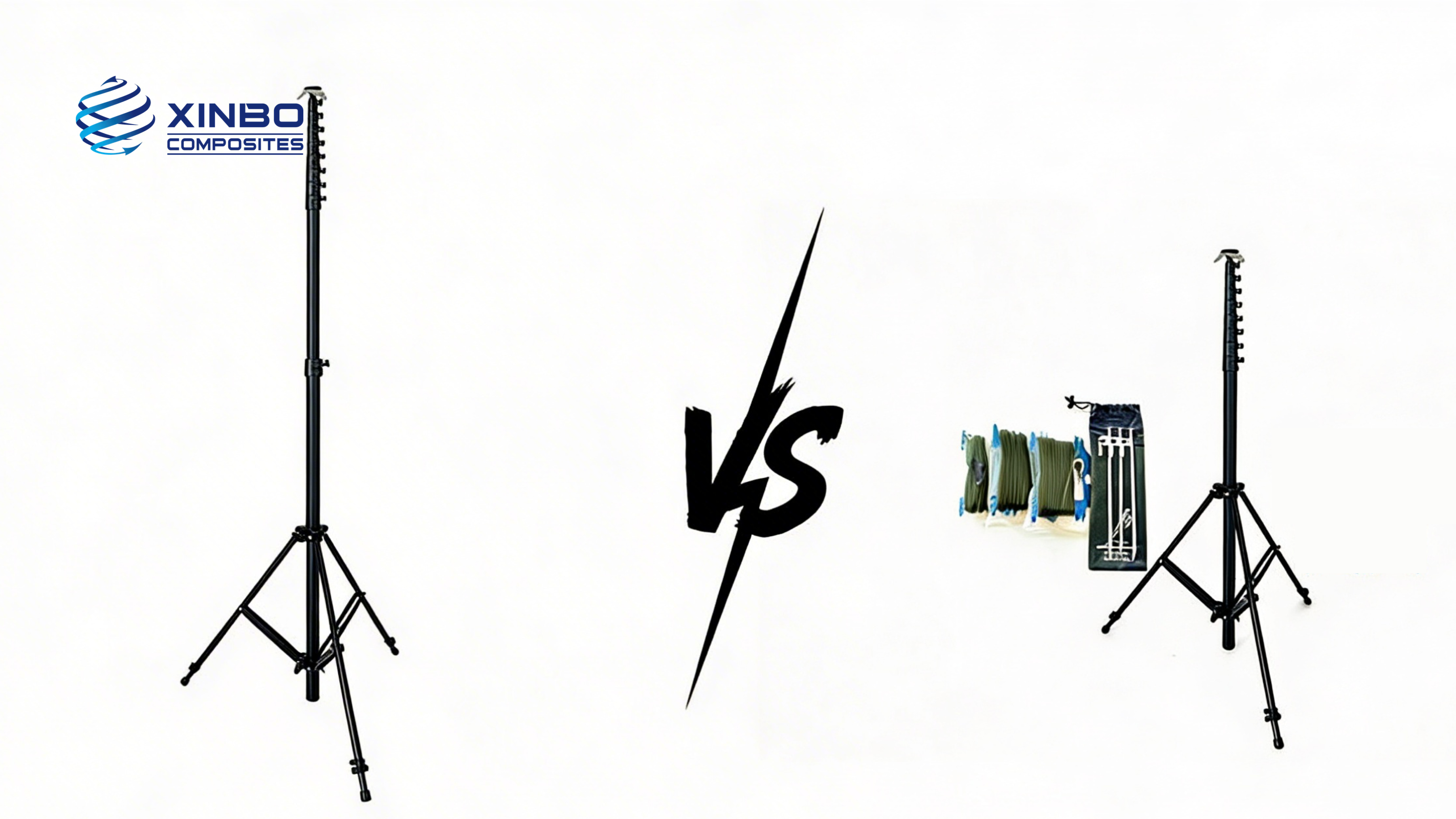
The material of antenna mast directly affects signal stability, installation flexibility, durability, and long-term maintenance.
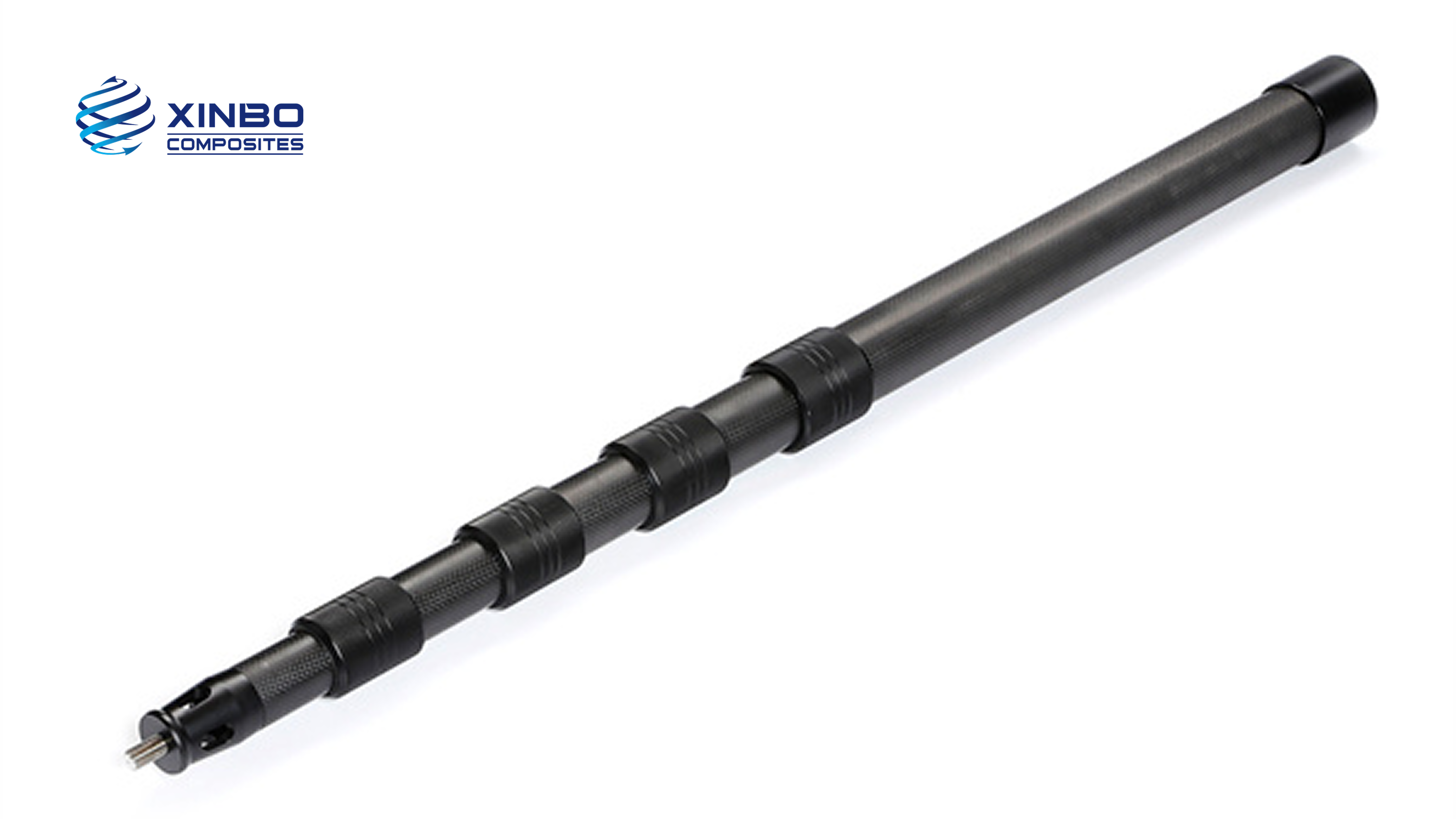
When engineers, installers, or communication professionals plan a project, the biggest question usually comes down is: “Should you choose a carbon fiber antenna mast or a fiberglass antenna mast?”
Both materials are widely used in modern antenna systems, but they serve slightly different purposes.
Understanding their strengths and limitations helps ensure your communication setup performs efficiently in the long run.
What Is an Antenna Telescopic Mast?
An antenna mast is a vertical support structure that elevates communication antennas to improve signal range and transmission quality.
The height and stability of the mast can significantly impact:
→ Signal strength
→ Transmission reliability
→ Coverage area
→ Installation flexibility
In many field setups, professionals rely on a telescopic mast for antenna because it allows adjustable height and quick deployment.
Modern telescopic antenna masts are typically made from advanced composite materials, including fiberglass tube structures and high-performance carbon fiber components.
Carbon Fiber Mast: Features and Benefits
A carbon fiber antenna mast is constructed using layered carbon fiber composites that provide exceptional strength while remaining lightweight.
These masts are widely used in portable communication systems, emergency networks, and broadcasting setups.
Carbon Fiber Antenna Masts Key Advantages
1. Extremely Lightweight
Carbon fiber is significantly lighter than metal or fiberglass alternatives. This makes installation easier, especially for temporary communication setups.
Many field engineers prefer systems built with carbon fiber telescoping tubes because they can extend tall structures without adding excessive weight.
2. High Structural Strength
Carbon fiber provides remarkable stiffness, which helps prevent bending or vibration in windy environments.
This rigidity is possible because the mast structure is built from engineered materials such as carbon fiber tube and reinforced composite layers.
3. Easy Portability
Portable communication teams frequently use a carbon fiber telescoping mast since it can collapse into a compact size and be transported easily.
For example, disaster-response teams often combine antennas with a carbon fiber extension pole for rapid setup in remote areas.
Fiberglass Antenna Mast: Features and Advantages
A fiberglass antenna mast remains one of the most widely used solutions in communication infrastructure.
Fiberglass is a durable composite material that provides strong electrical insulation and weather resistance.
Fiberglass Masts Key Advantages
1. Excellent Electrical Insulation
Fiberglass does not conduct electricity. This makes fiberglass masts ideal for environments where electrical isolation is critical.
2. High Corrosion Resistance
Fiberglass performs well in harsh environments such as coastal regions or industrial sites.
3. Cost-Effective for Permanent Installations
Fiberglass masts are generally more affordable than carbon fiber systems, making them suitable for fixed installations.
Carbon Fiber vs Fiberglass Antenna Mast: Quick Comparison
| Feature | Carbon Fiber Mast | Fiberglass Mast |
|---|---|---|
| Weight | Extremely lightweight | Moderately heavy |
| Strength | Very high stiffness | Strong but more flexible |
| Electrical Conductivity | Conductive | Non-conductive |
| Portability | Excellent | Moderate |
| Cost | Higher | More affordable |
| Durability | Very high | High |
Because of these differences, project requirements usually determine which material works best.
When Should You Choose a Carbon Fiber or Fiberglass Antenna Mast ?
Carbon fiber masts are ideal when portability, strength, and fast deployment are priorities.
→ Emergency communication networks
→ Mobile broadcasting systems
→ Temporary antenna installations
→ Field testing environments
→ Portable communication towers
For example, portable communication setups often combine antennas with a carbon fiber pole or a heavy duty telescopic pole for easy height adjustment.
Fiberglass masts are typically preferred for permanent installations where electrical insulation and cost efficiency are more important.
→ Fixed communication towers
→ Weather monitoring stations
→ Marine antenna installations
→ Industrial communication systems
Some high-end systems even use specialized structures like a tapered telescopic pole to improve load distribution and stability.
Antenna Telescopic Masts Applications
Modern antenna mast systems are used across many industries.
1. Telecommunications: Telecom engineers deploy telescopic masts during network testing or rural signal expansion.
2. Broadcasting: Live broadcasting setups often use telescopic antenna systems to support temporary communication equipment.
3. Emergency Services: Disaster-response teams depend on portable masts to restore communication infrastructure quickly.
4. Scientific Research: Environmental monitoring stations frequently rely on composite antenna masts for long-term installations.
Frequently Asked Questions (FAQ)
Q: Which is better: carbon fiber or fiberglass antenna mast?
A: Carbon fiber antenna masts are better for portable installations because they are lightweight and extremely strong. Fiberglass masts are better for permanent setups where electrical insulation is important.
Q: Why are telescopic antenna masts used?
A: Telescopic masts allow adjustable height, quick installation, and improved signal performance compared to fixed towers.
Q: Are carbon fiber antenna masts durable?
A: Yes. Carbon fiber masts are highly durable, corrosion-resistant, and capable of supporting communication equipment even in challenging environments.
Q: Do fiberglass masts interfere with signals?
A: No. Fiberglass is non-conductive and does not interfere with radio frequency signals, which is why it is often used for communication infrastructure.
Making the Right Material Choice
Choosing between a fiberglass and carbon fiber antenna mast depends largely on how and where the mast will be used.
Carbon fiber masts excel in portability, lightweight handling, and high structural strength, making them ideal for mobile communication systems and temporary installations.
Fiberglass masts, on the other hand, remain a reliable solution for fixed installations where electrical insulation and cost efficiency are priorities.
Understanding these differences helps engineers and installers select the most suitable antenna support structure for their specific project requirements.
If you’re exploring high-performance composite solutions for antenna infrastructure or specialized applications, at Xinbo Composites, we provide advanced engineering expertise and materials designed to support modern communication systems.
As communication technologies continue to evolve, advanced composite materials will play an even greater role in building stronger, lighter, and more adaptable antenna systems.