
A strong signal often depends on one simple factor: height. The higher an antenna is positioned, the clearer and more stable the signal becomes.
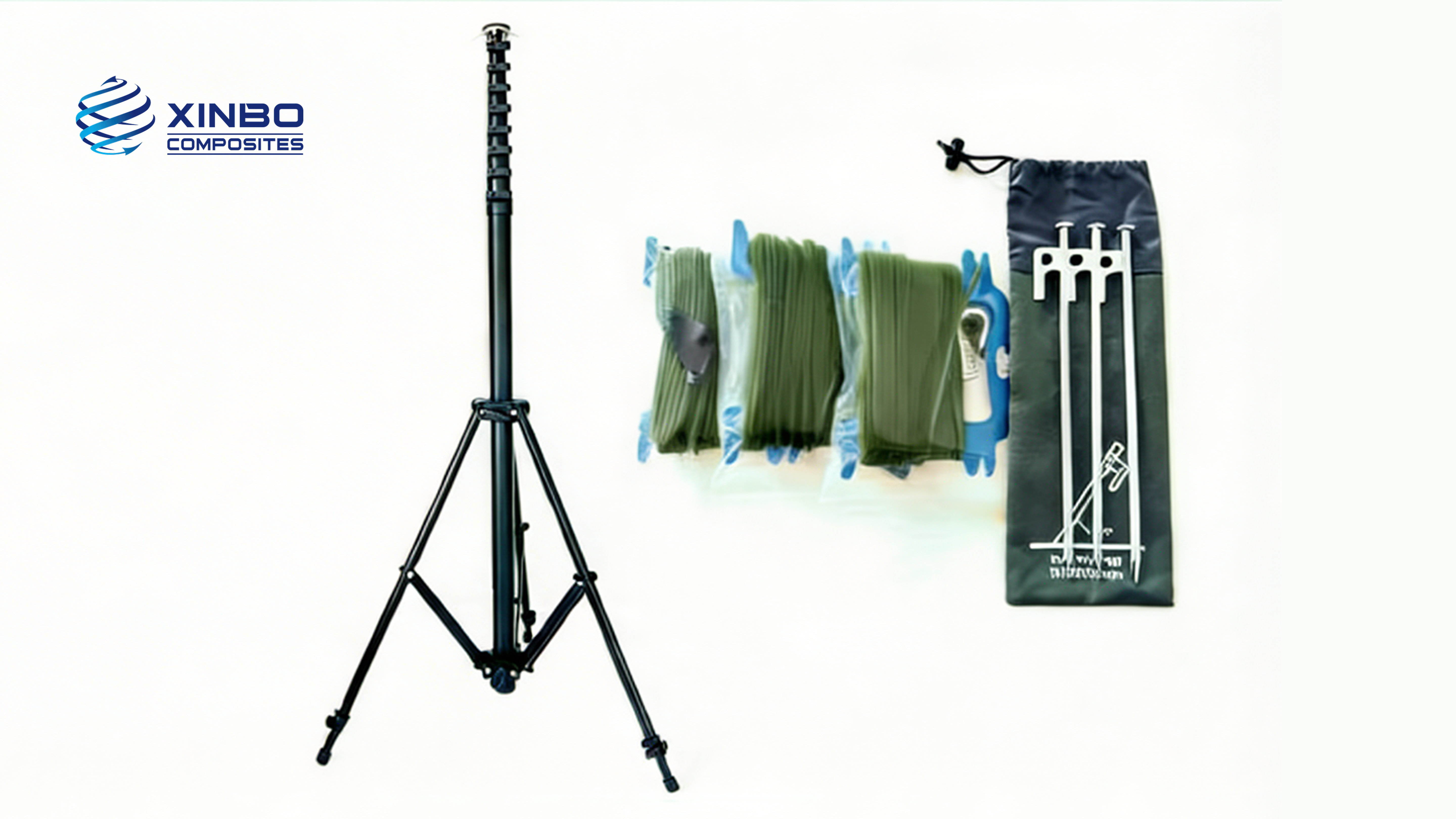
However, installing fixed towers is expensive, time-consuming, and not always practical, especially in temporary or remote setups.
This is where modern telescopic mast for antenna offer a powerful advantage.
Adjustable mast structures allow engineers, technicians, and communication professionals to quickly deploy antennas at the ideal height without permanent infrastructure.
In this guide, we’ll get to know how telescopic masts work, why they improve antenna performance, and why industries increasingly rely on composite telescopic mast technologies for communication systems.
What Is a Telescopic Mast?
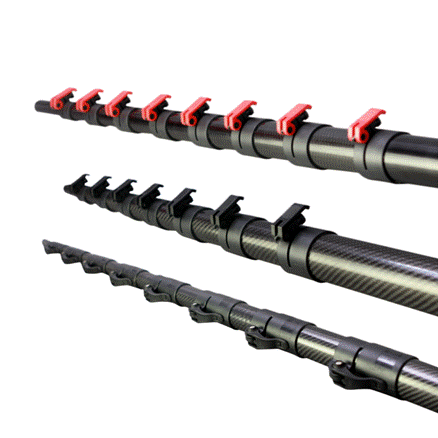
Telescopic mast is a multi-section pole that extends vertically using sliding carbon fiber or fiberglass segments. These sections lock into place to provide adjustable height for mounting communication equipment.
A typical system may include a carbon fiber telescoping mast designed to support antennas, sensors, or communication devices while remaining portable and easy to deploy.
Unlike permanent towers, telescopic masts can collapse into a compact size for transport and be installed within minutes.
Composites Telescopic Antenna Masts Advantages
1. High Strength-to-Weight Ratio
Carbon fiber or fiberglass is significantly lighter than metallic counterparts. This makes them ideal for:
* Portable Operations: Easier for a single person to transport and set up.
* Vehicle Roof Mounts: Reduce the center of gravity and minimize wear on vehicle suspension.
* Payload Capacity: Despite their low weight, carbon fiber masts can support substantial top loads with minimal deflection.
2. Corrosion and Weather Resistance
Unlike steel or aluminum, which can corrode in salty environments, composites are inert.
* Marine Environments: Highly resistant to salt spray and humidity.
* Longevity: They do not require painting or specialized coatings to maintain structural integrity over time.
3. Dielectric Properties (Fiberglass)
Fiberglass masts are non-conductive, which provides unique electronic advantages:
* Reduced Interference: Because the mast is transparent to RF (Radio Frequency) signals, it doesn’t act as a parasitic element that distorts the antenna’s radiation pattern.
* Safety: Non-conductive masts offer a layer of protection against accidental contact with overhead power lines.
4. Rigidity and Low Wind Deflection
Carbon fiber, in particular, has a very high modulus of elasticity.
* Stability: In high-wind conditions, a carbon fiber mast will remain much stiffer than an aluminum one, ensuring the antenna stays pointed in the correct direction (crucial for directional microwave or satellite links).
* Vibe Dampening: Composites naturally absorb vibrations better than metals, leading to more stable signal performance.
Because of these advantages, communication engineers often rely on adjustable mast systems such as a carbon fiber antenna mast during field deployments.
Why Are Telescopic Masts Better Than Fixed Towers?
Fixed antenna towers are still used for permanent installations, but they lack flexibility.
Telescopic mast systems provide several practical benefits.
1. Quick Deployment: A telescopic mast can be installed quickly without heavy construction equipment.
2. Adjustable Height: Technicians can easily raise or lower the antenna to test signal performance.
3. Portability: A telescopic mast collapses into a compact structure for transport.
Some systems integrate a carbon fiber telescopic pole or fiberglass telescopic pole mechanism that allows sections to extend and lock securely with a simple rotational motion.
Quick Comparison: Telescopic Mast vs Traditional Antenna Tower
| Feature | Composite Telescopic Mast | Traditional Tower |
|---|---|---|
| Installation Time | Very fast | Time-consuming |
| Portability | High | Low |
| Height Adjustment | Adjustable | Fixed |
| Cost | Lower installation cost | Higher infrastructure cost |
| Flexibility | High | Limited |
Frequently Asked Questions (FAQ)
Q: What is the best material for an antenna mast?
A: Carbon fiber and fiberglass are both excellent options. Carbon fiber offers lightweight strength, while fiberglass provides electrical insulation.
Q: Are telescopic antenna masts portable?
A: Yes. Carbon fiber or fiberglass telescopic masts collapse into compact sizes, making them easy to transport and deploy in temporary communication setups.
Q: How tall can telescopic masts extend?
A: Depending on the design, telescopic masts can extend from a few meters to more than 15 meters while maintaining stability.
The Future of Flexible Antenna Support Systems
Reliable communication depends on proper antenna positioning, and telescopic mast systems make that possible without a complex setup.
Advanced composite materials like carbon fiber and fiberglass have made these systems stronger, lighter, and more adaptable across industries, from telecommunications and broadcasting to inspection and emergency response.
As communication technology continues to evolve, telescopic mast systems will remain essential tools for professionals who need reliable signal performance and installation flexibility.
For organizations exploring advanced composite mast solutions and customizable telescopic systems, Xinbo Composites offers engineering expertise and innovative materials designed for modern communication challenges.