
When operational range, safety, and stability are paramount, material selection becomes crucial. From rescue operations to inspection and professional filming, telescopic poles must perform without adding unnecessary weight.
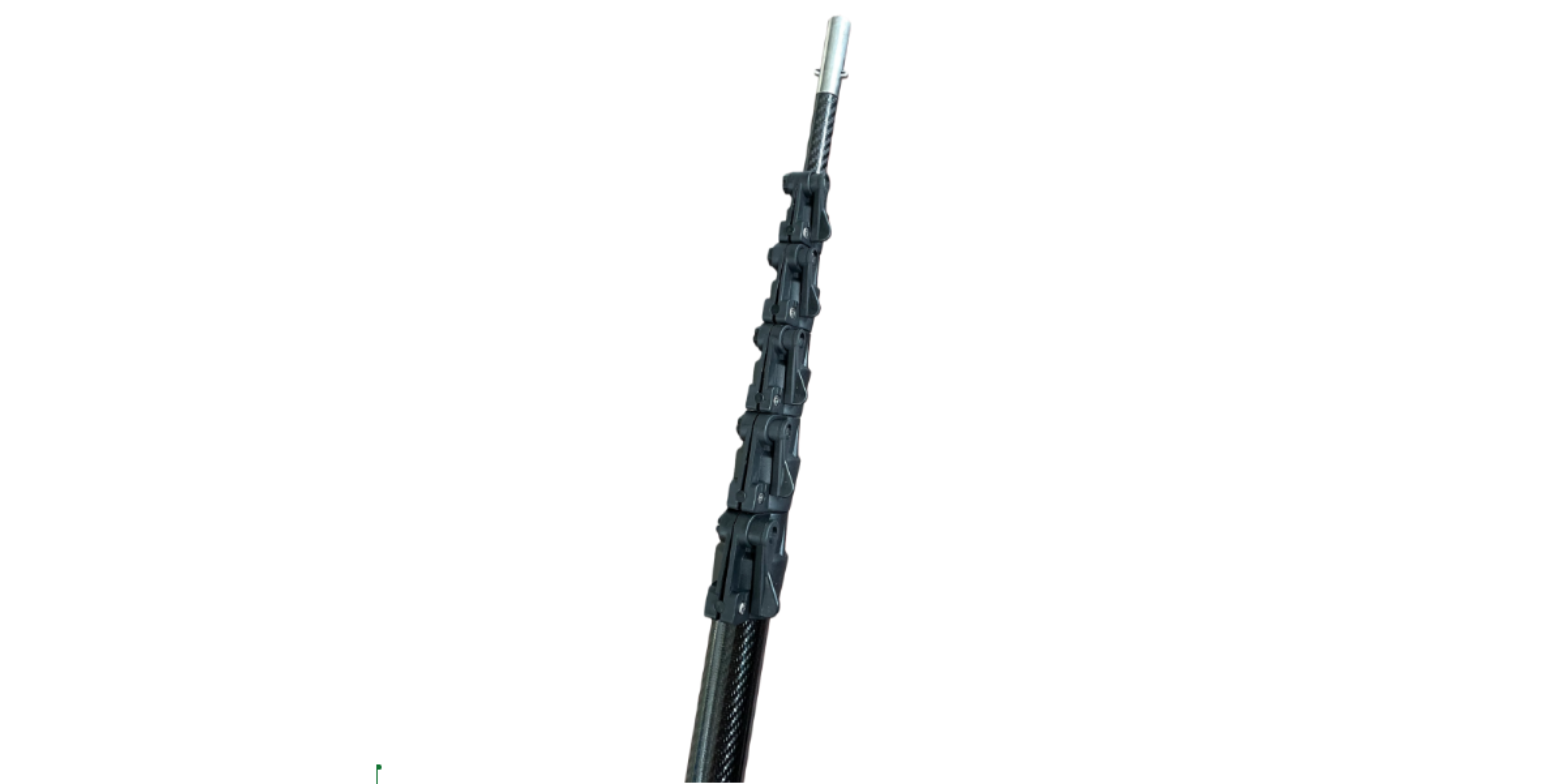
This is exactly why carbon fiber has become the best material for modern telescopic systems.
This blog explains why carbon fiber outperforms traditional materials, how it’s used across industries, and what makes it the smartest choice for heavy-duty telescopic poles today.
Why Material Choice Matters in Telescopic Poles
A telescopic pole is only as reliable as the material it’s made from. These systems are often extended to significant lengths, exposed to wind, water, load stress, and frequent handling. If the material flexes too much or becomes too heavy, performance and safety drop quickly.
This is where carbon fiber stands apart. offering high stiffness, low weight, and excellent durability in demanding environments.
What Makes Carbon Fiber Ideal for Heavy-Duty Telescopic Pole?
Carbon fiber combines tightly woven fibers with resin to create a structure that is both lightweight and extremely strong. Compared to aluminum or steel, it delivers superior performance with less physical strain on the user.
Key benefits include:
- High stiffness with minimal flex
- Corrosion resistance
- Easy handling at extended lengths
- Long service life
These advantages are exactly why professionals rely on a Heavy Duty Telescopic Pole built from carbon fiber rather than metal alternatives.
Heavy Duty Carbon Fiber Telescopic Pole Applications
1. Rescue & Emergency Operations
In rescue scenarios, speed and reliability can save lives. A telescopic rescue pole must be strong enough to support weight while remaining light enough for rapid deployment.
A carbon fiber rescue pole offers this balance, performing reliably even in wet or unstable conditions.

2. Cleaning & Maintenance
For exterior maintenance, professionals depend on telescopic cleaning pole without fatigue. A carbon fiber window cleaning pole paired with a water fed cleaning pole allows efficient cleaning while reducing operator strain.
The same applies to a solar panel cleaning pole, where stability and reach directly affect safety and efficiency.
3. Telescopic Pole Inspection Camera Systems
Carbon fiber telescopic poles are widely used in visual capture and inspection due to their vibration-damping properties.
Applications include:
→ A Telescopic camera pole or a carbon fiber camera pole for stable shots
→ Aerial photography pole solutions for controlled elevation
→ Telescopic pole inspection camera for industrial inspections
→ Underwater inspection pole where corrosion resistance is critical
Carbon fiber ensures smooth operation even at full extension.
4. Structural & Engineering Advantages
Carbon fiber telescopic systems rely on precision-engineered telescoping tubes that maintain rigidity across multiple extension stages. Compared to a fiberglass telescopic pole, carbon fiber offers higher stiffness at a lower weight.
In antenna and communication systems, alternatives like a fiberglass antenna mast exist, but carbon fiber is increasingly preferred for high-performance needs such as a telescopic mast for antenna, carbon fiber antenna mast, or carbon fiber telescoping mast where wind load and vibration control matter.
5. Design Features That Improve Performance
Modern carbon fiber telescopic poles often include advanced design elements:
- Twist lock telescopic pole mechanisms for quick and secure adjustments
- Tapered telescopic pole designs that improve load distribution
- Anti-rotation carbon fiber telescopic pole systems for precise control
These features enhance safety, accuracy, and ease of use across applications.
How to Choose the Right Carbon Fiber Telescopic Pole System?
You should consider the following points before selecting a telescopic pole,
- Required maximum extension
- Load and environmental exposure
- Need for rotation or anti-rotation
- Frequency of use and handling time
Frequently Asked Questions
Q: Why is carbon fiber better for telescopic poles?
A: It offers higher stiffness and lower weight than metal, improving reach, safety, and usability.
Q: Are carbon fiber telescopic poles waterproof?
A: Yes, carbon fiber resists corrosion and performs well in wet environments.
Q: Can carbon fiber poles handle heavy loads?
A: Yes, when properly designed, they support significant loads with minimal flex.
Q: Are fiberglass poles cheaper?
A: They can be, but they are heavier and less stiff than carbon fiber.
Q: Do telescopic poles wear out over time?
A: High-quality carbon fiber systems have long service lives if properly maintained.
Final Thoughts: Strength You Can Rely On
Carbon fiber has redefined what telescopic poles can achieve, making them lighter, stronger, and more reliable across rescue, inspection, cleaning, and imaging applications.
It has become a practical, reliable solution for modern telescopic systems where strength, stability, and weight control must work together.
Across rescue, inspection, cleaning, and imaging use cases, its performance advantages align closely with what professionals actually need in the field.
At Xinbo Composites, this understanding shapes how telescopic pole systems are engineered, focusing on material quality, structural consistency, and real-world performance rather than shortcuts.
The result is equipment designed to perform reliably at full extension, over time, and under demanding conditions